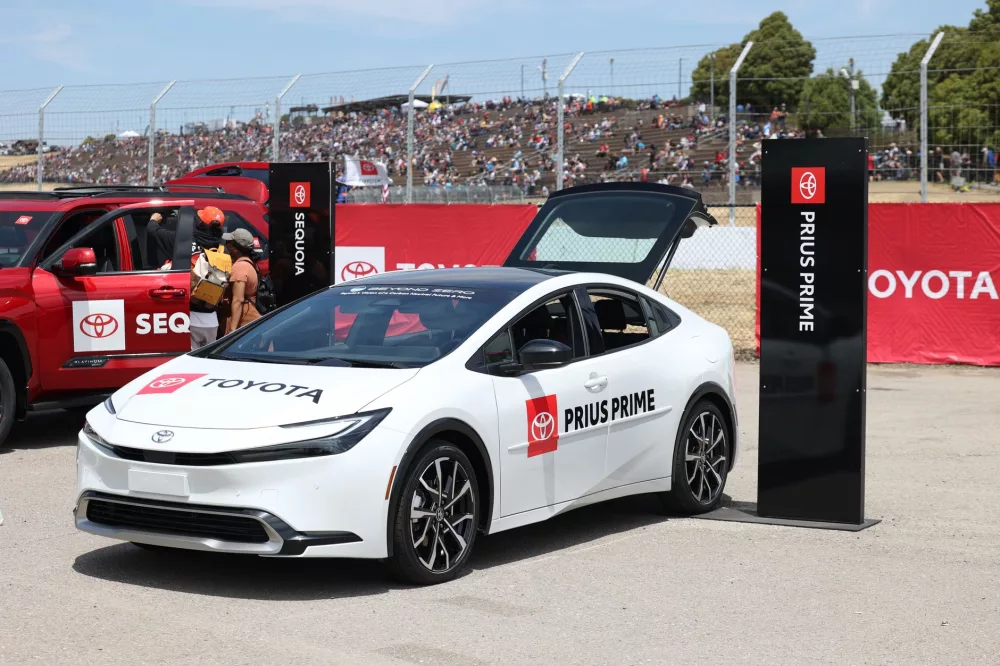
You know, when we talk about electric vehicles (EVs), my mind often jumps to brands like Tesla, Hyundai, or even Ford these days. But what about Toyota? The company that practically invented the hybrid with the Prius, setting the stage for electrified mobility decades ago, seems to have had a bit of a slower start in the pure battery electric vehicle (BEV) race. And honestly, for a while there, I was a little puzzled. What was going on? Were they missing the boat, or was there a grander, more calculated plan unfolding?
Toyota's Hybrid Legacy: The Unsung Hero
I think it's impossible to talk about Toyota's EV strategy without first tipping our hats to their incredible work with hybrids. The original Prius, launched way back in 1997, wasn't just a car; it was a paradigm shift. It showed the world that you could blend gasoline and electric power for incredible efficiency, and it normalized electrification in a way no other car had. Fast forward to today, and Toyota has sold something like over 20 million electrified vehicles globally, with hybrids making up the lion's share. That's a huge number! This extensive experience gave them an unparalleled understanding of battery management, electric motors, and power control units, which, in my opinion, provides a really strong foundation for their BEV efforts, even if it took them a bit to fully lean into it.
My take is that this hybrid success might have actually made them a little cautious about pure EVs initially. Why rush when your current tech is selling like hotcakes and meeting emissions targets? They were, I suppose, optimizing for what they knew worked best. But as the market shifted, I'm seeing a clear change in their approach.
The bZ4X and Beyond: First Steps into the Pure EV World
Okay, so Toyota's big debut into the modern pure EV market came with the bZ4X. And I've got to say, it's an interesting entry. Designed specifically as a battery electric vehicle from the ground up, it shares its e-TNGA platform with Subaru's Solterra. It's got decent range, a distinctive look, and the quality you'd expect from Toyota. But it wasn't exactly a groundbreaking disruptor, you know? It felt like a cautious first step, perhaps testing the waters and learning what consumers really want in a dedicated EV.
It's not just the bZ4X, though. We're also seeing the Lexus RZ, a luxury counterpart, and there are plans for many more models under the 'bZ' (Beyond Zero) moniker. Toyota has said they plan to introduce 30 BEV models globally by 2030, aiming for 3.5 million BEV sales annually. That's a massive acceleration, and it tells me they're finally putting their considerable might behind this. It's a clear signal: they're not just playing around anymore.
What's Next for Toyota's EV Lineup?
- New Dedicated Platforms: While the e-TNGA platform is a start, Toyota knows they need more flexibility and efficiency. We're hearing about new, purpose-built EV platforms that will enable even better range, packaging, and driving dynamics.
- Diverse Vehicle Types: Expect to see everything from compact urban commuters to large SUVs and even commercial vehicles getting the BEV treatment. They're not going to limit themselves to one segment.
- Global Rollout: The expansion won't be confined to specific markets. Toyota is looking at a truly global BEV strategy, adapting vehicles to local needs and preferences.
The Battery Breakthrough: Solid-State and Beyond
This is where things get really exciting for me regarding Toyota. For years, they've been talking about solid-state batteries, and they've invested heavily in the research. Why does this matter? Well, solid-state batteries promise a lot: higher energy density (meaning more range in a smaller, lighter package), faster charging times, and potentially greater safety compared to current lithium-ion batteries. Imagine a car that charges in minutes and goes for hundreds of miles! That's the dream, right?
While commercialization has been challenging, Toyota is still very bullish on solid-state technology, with plans to introduce it in production vehicles later this decade. They're also working on improving current lithium-ion tech, exploring different chemistries like bipolar nickel-metal hydride (which they're already using in some hybrids) and even cheaper lithium-iron phosphate (LFP) batteries for more affordable models. It's a multi-pronged approach to battery development, which I think is a smart move, not putting all their eggs in one high-tech basket.
A Multi-Pathway Approach: Not Just BEVs
One thing I find really distinctive about Toyota is their persistent belief in a