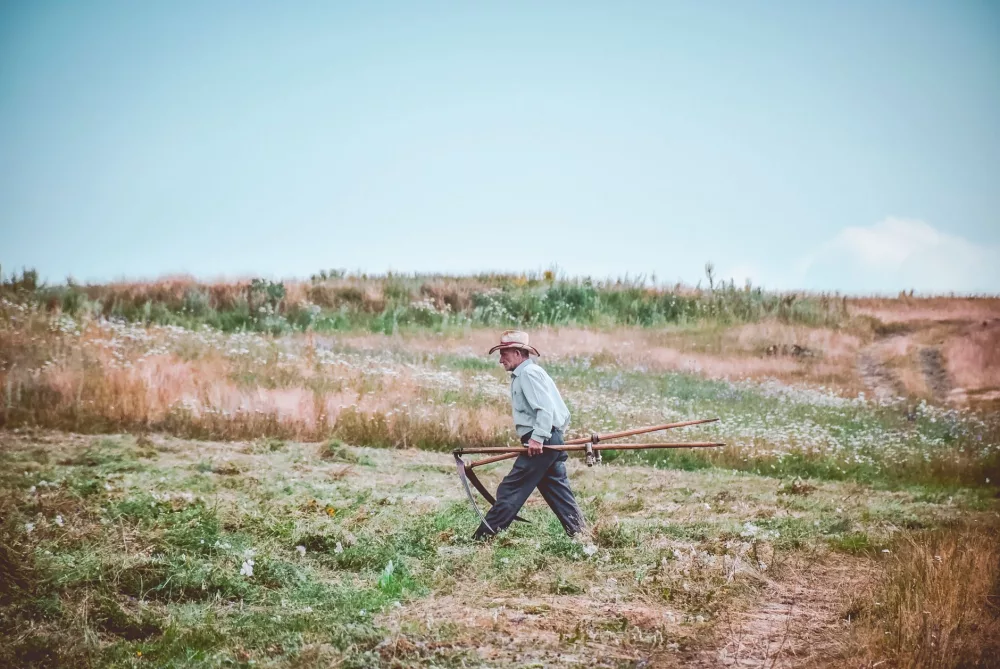
When I think about tools that have genuinely shaped human civilization, few come to mind with the quiet power and enduring elegance of the scythe. It's more than just a tool for cutting grass; it’s an implement that represents centuries of agricultural practice, a connection to the land, and a fascinating blend of simple mechanics with profound skill. I've always found it captivating how something so seemingly straightforward can be so effective and, frankly, so beautiful to watch in expert hands.
My own journey into understanding the scythe began not out of necessity, but out of curiosity. I was tired of the noise and fumes of modern power tools for managing my small meadow, and I yearned for a more meditative, sustainable approach. What I discovered was an incredibly efficient and satisfying method of land management that I think more people should explore.
What Exactly Is a Scythe? Breaking Down the Basics
For those unfamiliar, a scythe isn't just a grim reaper's prop; it's a hand tool primarily used for mowing grass, harvesting crops, or clearing undergrowth. It consists of a long, curved blade attached to a shaft, typically made of wood, called a snath. The snath usually has two handles, or grips, positioned for comfortable and ergonomic use.
I find it pretty amazing how the basic design has remained consistent for centuries, a true indicator of its effectiveness. While modern materials might creep in, the core principles stay the same. It's a lever, really, designed to use the user's body weight and momentum to slice through vegetation.
The Anatomy of a Well-Crafted Scythe
Let's talk about the parts, because each plays a crucial role in its function:
- The Blade: This is the business end, obviously. Scythe blades are long, thin, and generally curved. The length and curvature vary significantly depending on the type of scythe and its intended use. My personal preference leans towards lighter, thinner blades for grass.
- The Snath: The handle or shaft. Originally, these were always wood, often ash or spruce. Modern snaths can be made from aluminum or composite materials, offering adjustable lengths and handle positions. I'm a traditionalist, so I prefer a well-balanced wooden snath.
- The Nibs (Handles): These are the two grips on the snath. Their placement is critical for ergonomics. A correctly adjusted scythe means less strain on your back and arms, something I learned the hard way when I first started!
- The Hafting Ring (or Collar): This metal ring attaches the blade securely to the snath. It allows for angle adjustments, which are super important for different mowing conditions.
Getting these components to work in harmony is what makes scything such an art. It's not just swinging; it's about balance and precision.
A World of Scythes: English, Austrian, and American Varieties
You might not realize it, but there's more than one kind of scythe out there, and I think understanding these differences is key to appreciating the tool fully. Each type evolved to suit specific needs and conditions.
- The English Scythe: When I picture an old-school scythe, this is often what comes to mind first. It typically features a heavier, thicker blade and a snath that's quite straight or has a gentle curve. It's a robust tool, often used for tougher growth and traditionally designed for a less rhythmic, more powerful swing. I've found it requires a bit more brute force than its continental counterparts.
- The Austrian (or Continental) Scythe: Ah, this is my favorite! This type features a much lighter, thinner, and often wider blade, paired with a distinctly curved snath that's usually adjustable. The design promotes a smooth, gliding, and incredibly efficient stroke. I've heard it described as a 'whispering' cut, and it truly is. It's fantastic for finer grass and much less fatiguing once you get the hang of it.
- The American Scythe: This version often blends features from both English and Austrian designs, though it tends towards the heavier side. You'll find a variety of blade shapes and snath styles, often characterized by a strong, almost industrial feel. It's a workhorse, no doubt, but perhaps less refined in its cutting action than the Austrian style for fine mowing.
The choice of scythe really depends on the job. For delicate meadow maintenance, I wouldn't trade my Austrian scythe for anything. For hacking through brambles, a sturdier English blade might be just the ticket.
A Step Back in Time: Scythe's Historical Journey
The scythe isn't a new invention; its origins stretch back thousands of years. Early versions, probably closer to sickles, were among humanity's first agricultural innovations. The development of the long-handled scythe marked a significant leap in efficiency, making it possible to clear larger areas of land and harvest crops like hay and grain much faster than with smaller hand tools.
I often reflect on how integral this tool was to feeding populations for centuries. Before mechanization, communities relied on the rhythm of the scythe. It wasn't just a tool; it was a way of life, a skill passed down through generations. Imagine entire fields being mown by hand; it's a humbling thought, isn't it?
The Industrial Revolution and the advent of the internal combustion engine certainly shifted things. Tractors and mechanical mowers took over, pushing the scythe into obscurity for commercial agriculture. However, I believe we're seeing a resurgence, and it's for good reason.
Why Scythe in the Modern World? The Undeniable Advantages
You might be wondering, with all our technological advancements, why on earth would anyone choose to use a scythe today? Well, I can tell you from personal experience, the benefits are compelling.
- Environmental Friendliness: No fuel, no emissions, no noise pollution. It's entirely human-powered. This is a huge plus for me; it feels right to work with the land without disturbing its peace.
- Quiet Operation: The only sound you'll hear is the gentle swish of the blade through grass. It's incredibly peaceful, almost meditative. My neighbors certainly appreciate it!
- Physical Exercise: It's a full-body workout, but it's low impact when done correctly. It engages your core, legs, and arms without the jarring vibrations of a power trimmer. I've found it to be a fantastic way to stay fit.
- Precision and Selectivity: You have incredible control over where you cut. This is invaluable for managing diverse habitats, avoiding wildflowers, or working around delicate plants. You can't do that with a strimmer!
- Cost-Effective: Once you buy a good scythe and some sharpening stones, your ongoing costs are practically zero. No fuel, no expensive repairs.
- Durability: A well-maintained scythe can last a lifetime, or even generations. Try saying that about your average lawnmower!
For small-scale farming, gardening, or managing ecologically sensitive areas, I truly believe the scythe is unmatched.
The Art of the Cut: Learning to Scythe
Learning to scythe isn't difficult, but it does require patience and practice. It's less about brute strength and more about technique, rhythm, and leverage. I remember my first few attempts were clumsy, but then something clicked, and it became an almost dance-like motion.
Key Aspects I've Learned:
- Setup is Everything: Adjusting the snath and blade angle to fit your body and the terrain is non-negotiable. A properly fitted scythe makes all the difference in preventing fatigue.
- The Peening Process: This is unique to scythes. Peening involves cold-hammering the blade's edge to thin and harden it, preparing it for sharpening. It's a skill that takes time to master, and it feels incredibly traditional. I actually find it quite satisfying.
- Sharpening (Whetstone): After peening, the blade is sharpened with a whetstone. Unlike axes or knives, scythes are sharpened frequently, often every few minutes during a long mowing session. It keeps that whisper-quiet, effortless cut.
- The Scythe Stroke: It's a wide, sweeping motion, using your whole body. You pivot from your hips, letting the blade glide through the grass. It's not a chop; it's a slice. Once you get the rhythm, it's incredibly efficient.
I've learned that you're not fighting the grass; you're working with it. It's a partnership between you, the tool, and the land.
Scythes Today: A Quiet Revival
Today, the scythe isn't just a relic. We're seeing a wonderful resurgence in its use among permaculturists, organic farmers, conservation groups, and even suburban gardeners. People are realizing its value for sustainable land management, for creating diverse habitats, and simply for the joy of working outdoors with a tool that connects them to history.
Conservation organizations, for example, often use scythes to manage delicate wildflower meadows where heavy machinery would cause too much damage. Small-scale farmers are rediscovering its effectiveness for harvesting hay or grain on difficult terrain. And I know plenty of folks like me who just enjoy the quiet satisfaction of mowing their lawn or field without a motor.
It's not just about nostalgia; it's about practicality, sustainability, and a deeper appreciation for how we interact with our environment. The scythe, in its elegant simplicity, offers a powerful alternative in a world often dominated by noise and complexity. I think that's why it holds such a special place, and why I believe it'll continue to find new users for generations to come.